
Dormer conversions
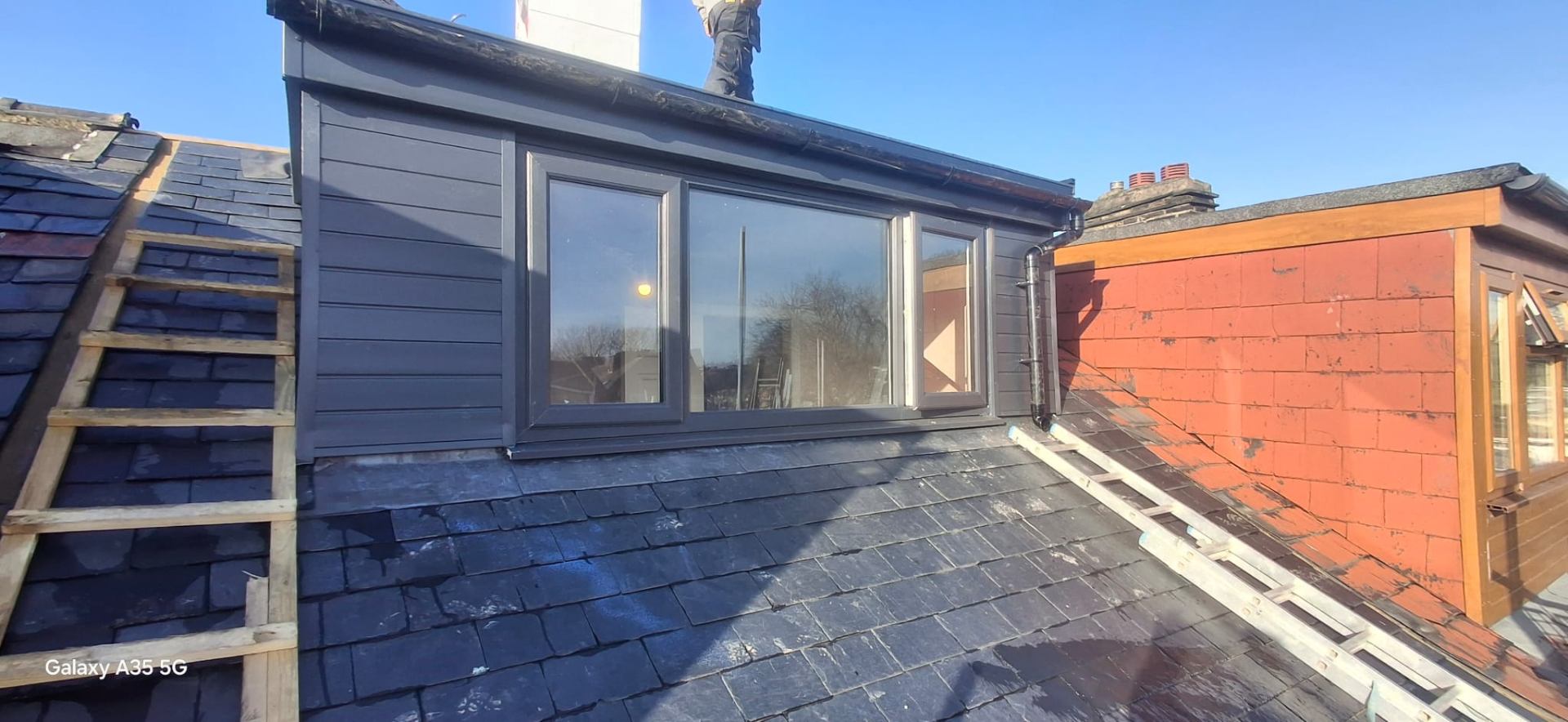
A flat-roof or pitched-roof box added to the rear roof slope. Adds the most usable floor area and full standing height. The most popular choice for Yorkshire semis.
Turn the dead space above your head into the most-used room in the house. Dormer, hip-to-gable, mansard and Velux conversions fully built and certified by one trusted Barnsley team.
Fixed price · Building Regs certified · 10-year written guarantee
A loft conversion adds a habitable room without taking a single square metre off your garden, your driveway or your downstairs layout. For most three-bed semis in Barnsley, Sheffield and Leeds it converts a £2,800/m² extension cost into roughly £1,400/m² — because the roof, walls and floor structure largely already exist.
Estate agents in South Yorkshire consistently report a 15–20% uplift in property value from a properly built four-bed conversion with en-suite. The numbers stack up faster than almost any other home improvement.
Families needing a fourth or fifth bedroom, home workers who can't concentrate downstairs, and anyone with grown-up children needing their own space.
When the existing bedrooms are full, when the office has eaten the dining room, or when the next move would cost £30k+ in fees.
Loft conversions require structural floor strengthening, fire-rated stairs, escape windows, Building Regs sign-off and Party Wall agreements. They are unforgiving of guesswork.
We've been called to remediate dozens of botched loft jobs. The same five issues come up again and again.
Original ceiling joists are sized to hold a plasterboard ceiling, not a bedroom floor. Without doubling-up or new C24 joists, the floor bounces and cracks the ceiling below.
Building Regs require minimum headroom of 2m over the stair pitch. Cut corners here and the room becomes unusable as a bedroom — it legally remains an 'attic'.
A loft bedroom requires a 30-minute fire-rated stair enclosure all the way to the front door. Skipping this means no completion certificate and no insurance.
Insufficient insulation between and below rafters turns the room into an oven by July. Spec to current Part L (0.16 W/m²K) and it stays comfortable year-round.
Badly flashed dormer cheeks leak. The water then tracks down the inside of the wall and shows up as a damp patch on the bedroom ceiling six months later.
We measure head height, rafter type and floor structure to confirm what type of conversion is achievable.
Written price plus architect's drawings within 7–10 days. We handle the planning route — PD or full application.
Steel beams installed to support the new floor and removed roof timbers. Floor joists upgraded to C24.
Dormer built, roof felted, slated and leaded. Stairs in, electrics, plumbing and underfloor heating roughed in.
Plaster, decoration, doors hung, en-suite tiled. Building Control final inspection and completion certificate issued.
Every square metre of your plot stays available. No driveway dug up, no rear lawn shrunk.
Best-in-class return per pound spent — verified by South Yorkshire estate agents.
Most work happens above the existing ceiling. You stay in the house throughout.
Many conversions don't need full planning, saving 8–12 weeks.
Building Control completion certificate protects your resale forever.
Workmanship cover backed by manufacturer warranties on the roof system.
The right type depends on your existing roof shape, available headroom and how the room will be used. Here's how we choose.
A flat-roof or pitched-roof box added to the rear roof slope. Adds the most usable floor area and full standing height. The most popular choice for Yorkshire semis.
On detached and end-terrace homes with a hipped (sloping) side roof, we rebuild that hip into a vertical gable wall. Creates significant extra width and is often combined with a rear dormer.
Replaces the existing roof with a near-vertical rear slope and a flat top. Maximum internal volume, common on period terraces. Requires planning permission.
The lightest-touch option — no change to the roof shape, just rooflights, insulation and a new floor. Best for lofts that already have generous headroom.
We use steel beams to span between party walls and carry both the new floor and the cut-away rafters. Engineered timber joists (typically 220mm C24) form the new floor deck.
Rafter level to current Part L (0.16 W/m²K) using a hybrid of PIR between rafters and insulated plasterboard below. Eliminates cold bridging.
Standard timber stair with 2m+ headroom over the pitch line. Where space is tight, we use space-saver stairs only with Building Control consent for a single-occupancy room.
We route waste via a Saniflo macerator or a new soil stack, depending on the existing layout. Underfloor heating is standard in en-suites.
Tell us about your project. We'll arrange a free site visit and send your itemised written quote within 48 hours — no obligation.
Family-run · 20+ years building across Yorkshire · Fully insured · 10-year workmanship guarantee
Essential cookies only — no tracking. Cookie Policy